This Sunday, We May Wait in Darkness, But Jesus Will Break Into Our World With Joy


There is a bleak atmosphere in the Gospel of the Nineteenth Sunday in Ordinary Time Year C — but there is also enormous hope.
Here are five takeaways drawn from Sunday Readings columns at this site and the Extraordinary Story podcast.
First: Jesus describes a scene of tense darkness that might sound like our life today.
His parable is all about the waiting we are doing right now for the Lord who rose, ascended, and left us in charge of his household, our world.
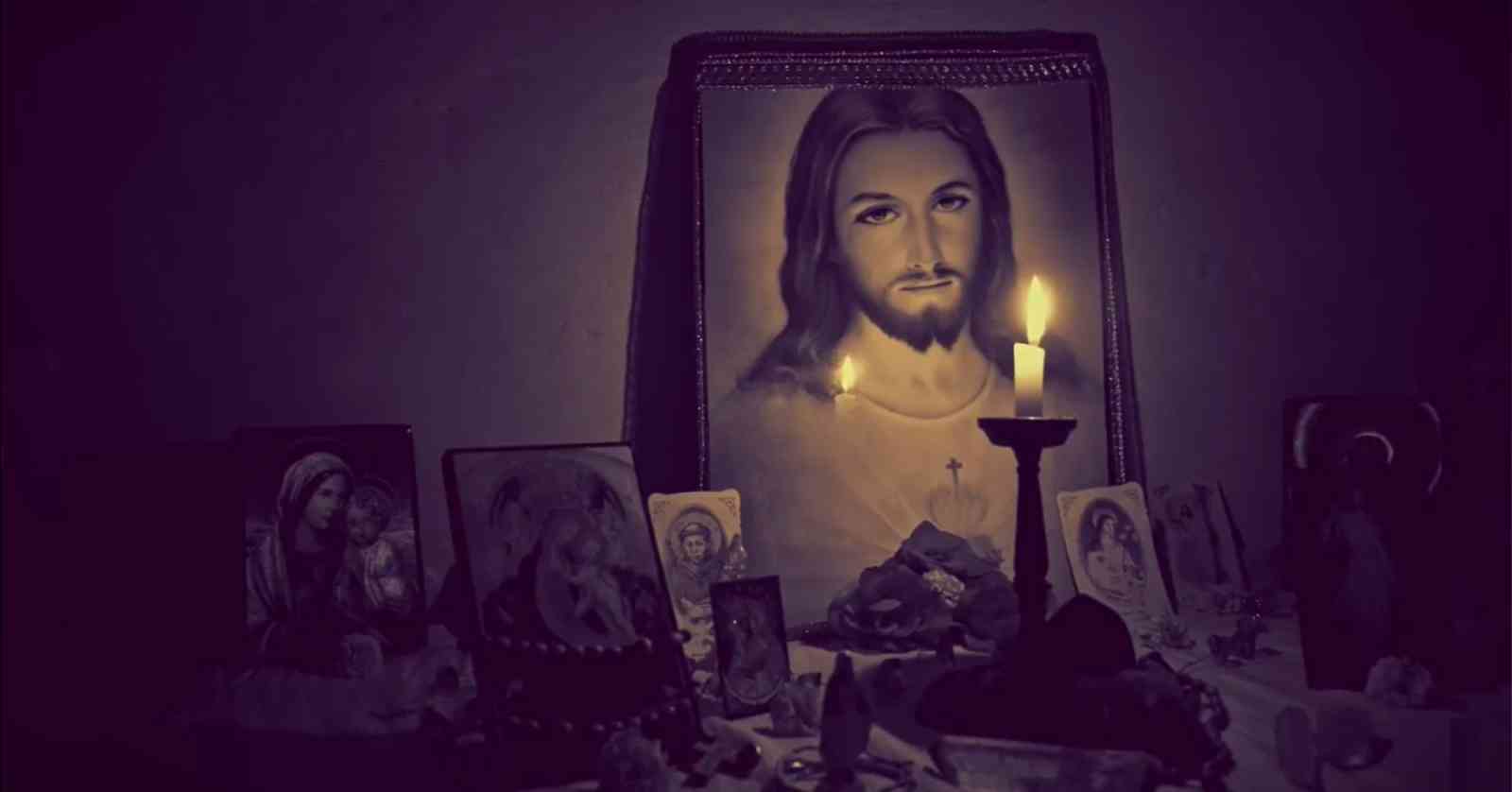
“Gird your loins and light your lamps and be like servants who await their master’s return from a wedding, ready to open immediately when he comes and knocks,” he says. He will come like a thief in the night, he said, and he specifically mentions the need to be at the ready even in “the second or third watch” — in other words between 10 pm and sunrise. We know what he means. With all of the anger, disappointment, and anxiety in the world, sometimes the only progress we seem to make in life is like watching the clock move from 1 a.m. to 3 a.m., as we stare — awake, alone, waiting, and worrying.
But the master is coming, says Jesus. And where is he arriving from? a wedding banquet. That’s a key detail. As Cyril of Alexandria writes, “This plainly shows that God always dwells in festivals that are fitting for him. In heaven above, there is no sadness whatsoever since nothing can occasion grief.”
So, while we bemoan the late hour and the darkness of the world, the Lord sees it in an entirely different way. He sees the great good in the world as we labor in his kingdom. And when the Lord returns, he will be energized from celebrating, not drained from worrying. He will be in such high spirits, in fact, that “he will gird himself, have his faithful servants recline at table, and proceed to wait on them.”
For our part, we have to be “ready to open immediately when he comes and knocks,” Jesus says in the Gospel. This applies to his coming in what the Fathers of the Church called “the first watch,” our youth; “the second watch,” our adulthood, or “the third watch,” our old age.
“What is the mark of a Christian?” St. Basil the Great asks. “It is to watch daily and hourly and to stand prepared in that state of total responsiveness pleasing to God.”
Second: Peter asks a great question: “Lord, is this parable meant for us or for everyone?”
In reply, Jesus asks Peter: “Who, then, is the faithful and prudent steward whom the master will put in charge of his servants to distribute the food allowance at the proper time?”
He is saying, “Who is in charge of my servants here? You are, Peter, and you, Apostles.” Today, he is saying “Yes, I mean you, Pope Leo, and you, bishops and pastors.”
He describes two kinds of church leaders: One kind is lax and indulgent. They lack faith, saying the master “is delayed in coming” and so they abuse the servants and “eat and drink and get drunk.” They tend to their own comforts while they neglect the sacraments.
Jesus describes the other kind of church leaders as vigilant and sober. They “distribute their portion of the truth at the proper time.” That would include food for the body, in works of mercy, and food for the soul, the sacraments. They find ways to share Jesus’s freeing message, showing how even the hard parts are there to teach us happiness. They would rather deliver challenging truths than false consolation.
Third: Jesus expects a lot from leaders. And from those they lead, too.
Jesus sets standards for leaders very high. How high? “That servant who knew his master’s will but did not make preparations nor act in accord with his will shall be beaten severely,” he says.
But those of us who are led by the leaders have to meet the same standard. The servant who was kept “ignorant of his master’s will but acted in a way deserving of a severe beating shall be beaten only lightly.”
Ouch.
One thing is clear: Jesus sees punishment as part of his spiritual message to us. There will be pain in the afterlife for those who are not prepared, even if it was in part the fault the fault of others. How is that okay?
Fourth: God doesn’t want to punish us; he wants to prepare us.
The newly named Doctor of the Church, St. John Henry Newman, describes how this works in one of his early sermons, called “Holiness Necessary for Future Blessedness”:
“Holiness, or inward separation from the world, is necessary to our admission into heaven, because heaven is not heaven, is not a place of happiness, except to the holy. … It is fearful, but it is right to say it — that if we wished to imagine a punishment for an unholy, reprobate soul, we perhaps could not fancy a greater [punishment] than to summon that soul to heaven. Heaven would be hell to an irreligious man.”
Picture someone who has spent his life avoiding God and sacred things being forced to spend an eternity with Jesus and his saints. He would be as unhappy in heaven as we are with strangers who we have nothing in common with, or who speak a language we don’t know and can’t learn. Newman goes on to say:
“God cannot change His nature. Holy he must ever be. But while He is holy, no unholy soul can be happy in heaven.”
So, Jesus isn’t warning us that a mean God will get us if we don’t watch out. He is warning us that an all-good God will be too much for us if we don’t prepare. God is not a heavenly policeman enforcing rules. He is an All-Consuming Fire of pure holiness, truth and justice. Our decision to accept or reject his will is less like the decision to break the speeding limit or not when we drive to the beach, and more like the decision to use sunscreen or not while we spend the day there in the sun.
Fifth: But please don’t miss the good news.
Let’s go back to the very beginning of the Gospel. Jesus says:
“Do not be afraid any longer, little flock, for your Father is pleased to give you the kingdom.”
As we wait huddled in the darkness, the voice of Our Lord comes to us saying not only that he loves us, but that we are the royal sons and daughters in his kingdom of love.
God doesn’t want to hurt us. He wants to make us great. We are not like Jezebels or Judases; we are like Abraham and Moses.
Like Abraham in the Second Reading, God is calling us to a new land, where we will fill the sky like stars with those who love him and trust him and believe in him, because “Faith is the realization of what is hoped for.” And like his Chosen People in the First Reading, he wants to draw us out of the darkness of captivity, and lead us to a new Promised Land.
So, fear not. Tuck in your robe, light a lantern in the darkness and get to work.
If we do what we are supposed to do, not only will the waiting be better, but the reward at our judgment will be astonishing.
“Blessed are the servants whom the master finds vigilant on his arrival,” Jesus says. “Amen, I say to you, he will gird himself, have them recline at table, and proceed to wait on them.”
If you don’t believe it, watch and see what happens at Mass. At every Mass, Jesus bursts into our lives in the Eucharist, ready to meet our sadness with his joy. Instead of wearing a tunic, though, he comes in the host and the chalice (and the confessional!) to invite us to his table. There, he offers us, his royal guests, everything — his body, blood, soul and divinity — in his total commitment to our well-being.
Image: Pixabay
By Tom Hoopes
Dear Reader,

Would you like to better understand the spiritual depth and daily insights of Jesus' parables?
We'd like to offer you our FREE video series, Christ the Storyteller. Each episode of this series will help you experience the profound truths Jesus conveys in each parable.
In 10 short lectures, Dr. Andrew Swafford, Professor of Theology, dwells on a different parable—revealing their theological meaning, spiritual insight, and practical guidance for everyday Catholic living.
Start your FREE video series today and explore the practical wisdom of Jesus’ Parables!
Receive My Free Video Series »