How to Use New Technologies Without Losing Your Soul


An Interview with Louisa Conwill and Walter Scheirer, Authors of Virtue in Virtual Spaces
What does it mean to use technology well? What does it mean to use it badly? Where is the line?
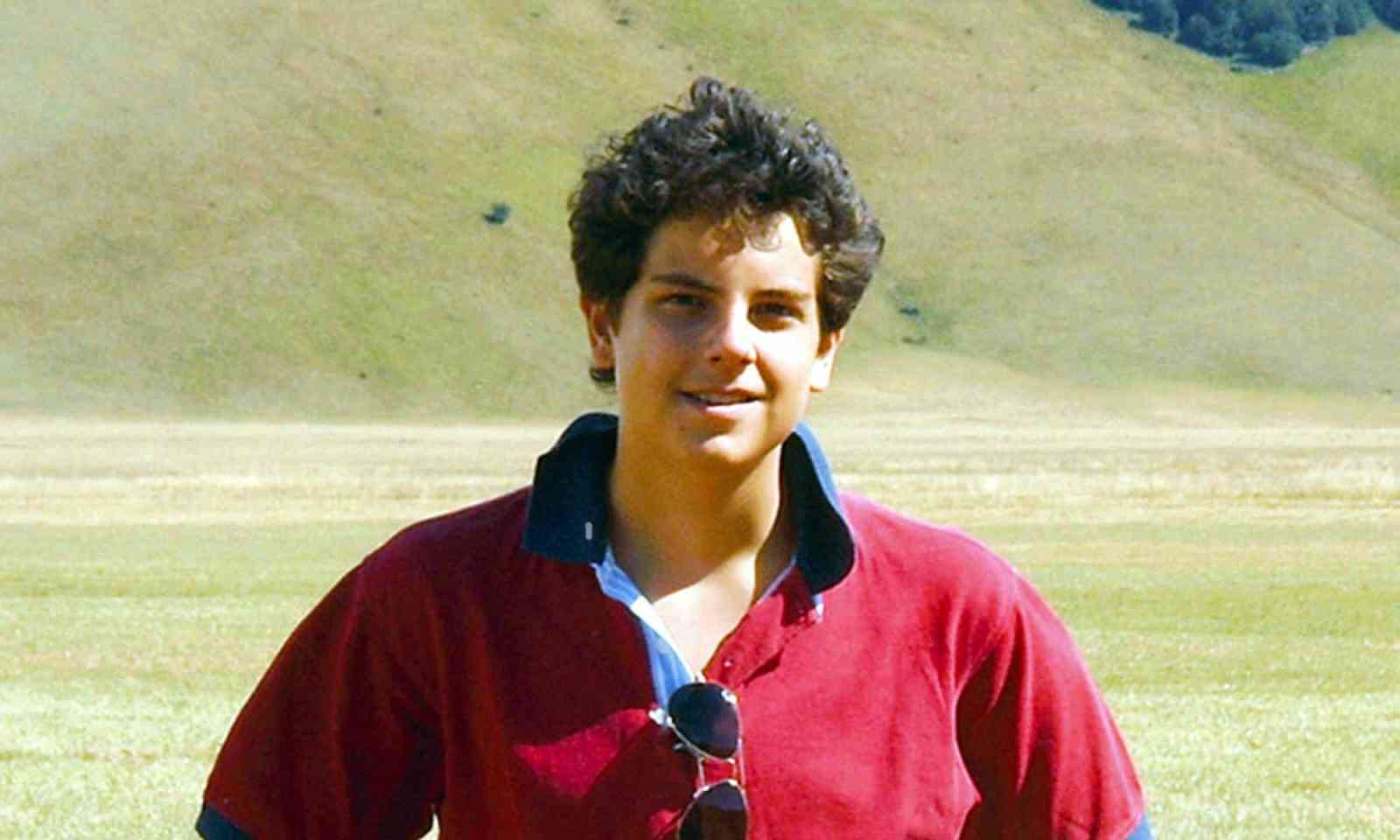
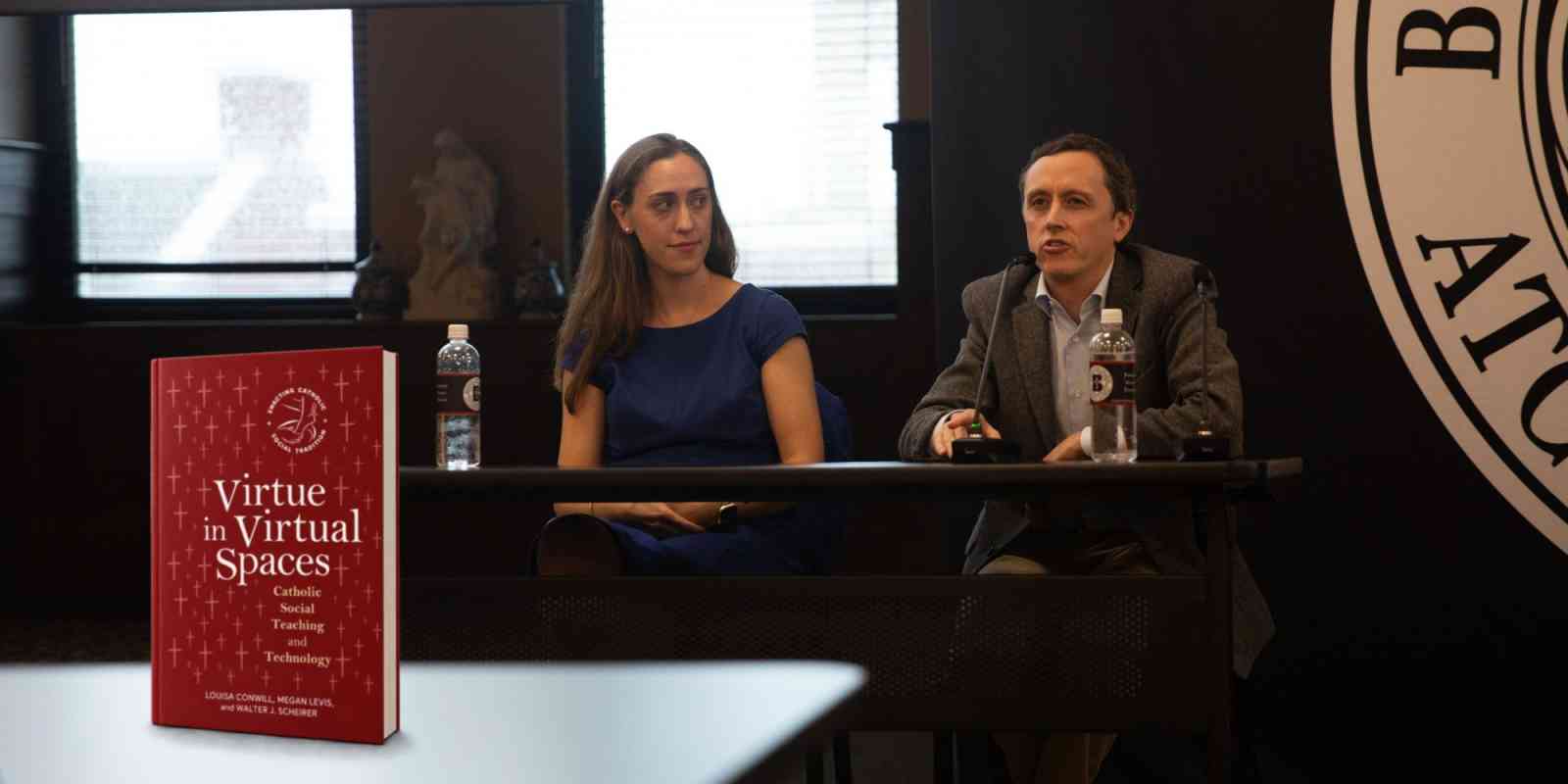
These questions are at the center of the new Carlo Acutis Fellows student program launched by Benedictine College’s Center for Technology and Human Dignity at its Atchison, Kansas campus. The book Virtue in Virtual Spaces is one answer. I sat down with the book’s authors to discuss their research and the role of technology in human life before their Oct. 1 presentation (watch it here) hosted by the Center.
They are Louisa Conwill, doctoral student in computer science and engineering at the University of Notre Dame, and Dr. Walter Scheirer, professor of computer science and engineering at Notre Dame. They wrote the book with Dr. Megan Levis-Scheirer, assistant professor of the practice with the Institute for Social Concerns and College of Engineering at Notre Dame.
Explain the experience you have in both the theological and technical sides of questions about digital ethics.
Scheirer: I’m a professor of computer science and engineering at the University of Notre Dame, and I’ve been doing computing for a long time. Louisa’s laughing because she knows the background here — I was into underground computer hacking and so I knew a lot about computers going into college, but I was an international relations major. At a certain point I got a job at a research lab and my boss said, “You should really think about adding a second major in computer science — you have an aptitude for this and there are no jobs for you in foreign relations.” So, I did that, and I continued on in graduate school.
Conwill: I graduated with an undergraduate degree in computer science, and my first job out of undergrad was working as a software engineer at Amazon. So I was in the industry, but I realized I wasn’t passionate about software engineering. I had the intention of going to graduate school after that, but I served as a FOCUS missionary for two years and then came back in 2021 to start my PhD in computer science at Notre Dame, and now am in my final year of the program.
Did your work raise questions about digital ethics?
Conwill: When I was leaving my job and heading towards grad school, I found myself more interested in the designs of the technologies and how those designs were impacting people, as opposed to the questions that software engineers answer … so I found a design research field called Human-Computer Interaction. I had that in mind but I wasn’t thinking about doing it from a Catholic perspective until, during my summer training with FOCUS, they actually taught us about Catholic social teaching and its history, and I learned for the first time that Catholic social teaching had its roots as a response to the Industrial Revolution, and so it’s responding to these questions of technology, society, and how technology is impacting people.
What does it mean for a technology to be “good” or “bad”?
Scheirer: Technologies are not neutral, and we’d like them to reflect the best in humanity, so a lot of our work has looked at virtue ethics. Can we go through what we think of as a virtuous design process? What kind of virtues would we like to design around? It helps cultivate virtue in the software engineer, but it also imparts these virtues on society.
It’s easy to dismiss the internet on account of its strong negatives, but most of us have had significant redeeming experiences with it. How do we balance these two? Where do you see the internet’s potential to contribute to the common good?
Scheirer: The internet has a lot of good aspects. For example, it’s good that it gets people together, especially people that it couldn’t get together ordinarily in the physical world. You can make friends with people on different continents … I personally feel like I’ve learned a lot from other people on the internet; I’ve had a good experience gaining knowledge and making friends with people not around me. But then, of course, it started to drive a wedge between people. The social media aspect sort of broke these better aspects that were always present on the infrastructure. So, again, the social nature of it is good.
Design of the internet inherently was Catholic. It’s putting people into communion. There’s something really good about that.
There’s an argument that rejecting technology without any curiosity towards it is somewhat of a denial of our nature. Have you given thought to that aspect?
Scheirer: We’re called to co-create with God — this is in the Bible. There’s something really interesting and important about creative acts. To deny technology, like we can’t build anything new, you’re sort of doing something contrary to your own nature. There is this easy solution, which is just to stop and back off, but that’s not a great reaction.
Conwill: The act of creation is a way of living into the fact that we were made in the image and likeness of God, who is Creator. Computer science offers us a lot of really cool ways to live that vocation of creation. It’s one new tool to help us co-create with God. There’s an element of the vocation to create: creating in service to other people. How can you build something that really fills a need and serves people?
Do people tend to misunderstand your argument?
Scheirer: I have this troll slide about our idea being the “Benedict Option” for the internet.
Conwill: People tend to take really strong stances on that. But when I think about the Benedict Option for the internet, I think of it as being less about hanging out with people online who have the same beliefs as you, and more about the infrastructure of the internet, rather than the people. So I almost think of the “Benedict Option for the internet” as maybe a social media platform that’s designed to uphold the principles of Catholic social teaching in terms of community and dialogue and promoting those things. People of different beliefs, but this virtuous space to hang out amidst all these other platforms on the internet that are promoting less healthy behaviors.
Did you have any moments doing the research where you thought, “Oh, this is why we are doing what we are doing”?
Conwill: There are three authors of the book Virtue in Virtual Spaces and we all took different case studies to write on. I was spearheading the Instagram case study for the book, and as I was writing it, I thought, “I need to be using Instagram differently” What I was writing on the page about how Instagram is bad but how it can also be good doesn’t align with my current use of Instagram.
After writing that section, I actually went through my Instagram and tried to make it smaller [. . .] When I was following people I wasn’t in touch with anymore, that was creating an artificial sense of community. If I’m sharing, I want to be sharing with the people with whom I’m in community in real life.
What sort of pushback have you all received?
Scheirer: We teach this in several courses at Notre Dame now, and I think the biggest pushback from technologists, like students who are going to be professional software engineers, is that they’ll say, “I’m on board with this, but my boss likely will not be.”
Again, companies have their own agendas — but I’ll say, “Think about it: you’re going to be the boss one day.” A lot of students end up on the management track at some point. I tell them to think about what we taught them and then to see, when they’re in the position of power, whether they can adjust things. I also tell a lot of students to think about doing a startup. There, you’re the boss. You can build whatever you want to build.
What has surprised you about the research?
Conwill: I’m very surprised at the reception of our research in the non-Catholic computer science arena.
Scheirer: Computer Science is an aggressively secular field. This is the realm of logic and reason. People often think, “We’re building these systems — we are the creators.” But lo and behold, people think [our research] is really interesting. They appreciate the perspective.
A lot of programmers and graduate students encounter the research and go, “You know, these principles of Catholic social teaching resonate with me. There’s nothing about it that I can say is wrong from my perspective.”
I would imagine that we can still misuse well-designed technologies. What posture do you suggest we have going forward?
Conwill: One design we’re really pushing is, “Chat! Chat!” But I know when I was in high school and I had a phone, I was definitely texting my friends too much. … I’d be at the grocery store with my mom and texting my friends when, really, I should have been paying attention to my surroundings.
So even with something like chatting, there’s some kind of virtue you have to cultivate — or maybe a maturity, too. Even if a design is good, you still have to cultivate virtue around it.
Watch the full panel here.
By Emma Fuentes
Dear Reader,

Would you like to better understand the spiritual depth and daily insights of Jesus' parables?
We'd like to offer you our FREE video series, Christ the Storyteller. Each episode of this series will help you experience the profound truths Jesus conveys in each parable.
In 10 short lectures, Dr. Andrew Swafford, Professor of Theology, dwells on a different parable—revealing their theological meaning, spiritual insight, and practical guidance for everyday Catholic living.
Start your FREE video series today and explore the practical wisdom of Jesus’ Parables!
Receive My Free Video Series »