Your Domestic Church Is a Little Boat: Our Modern-Day Dunkirk Evacuation


April Hoopes presented this paper on the apostolic activity of families in Atchison, Kansas, at the Benedictine College Symposium for Transforming Culture on March 21, 2025.

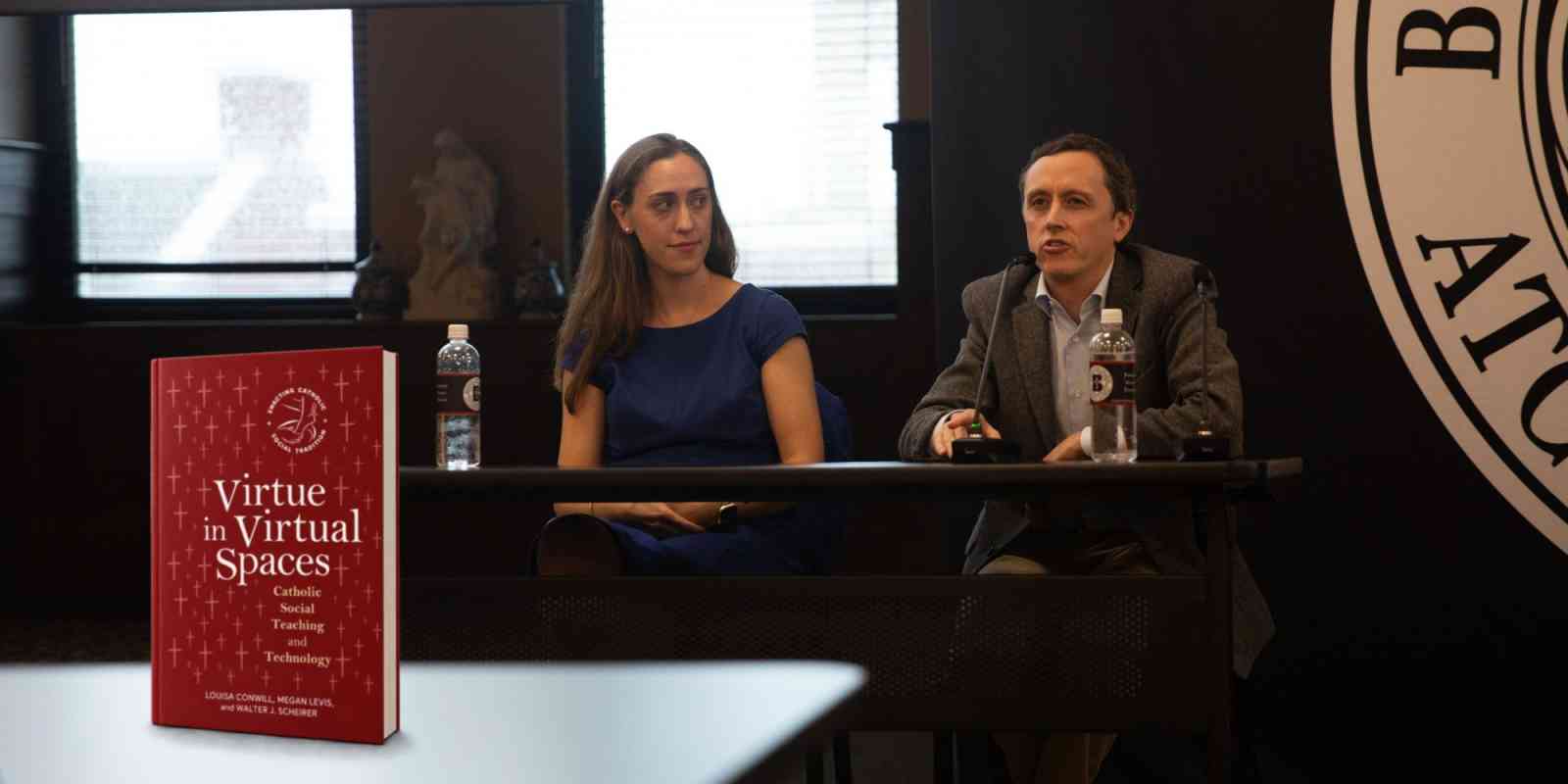
I want to reflect on a fascinating concept I heard at Family Week (pictured) here at Benedictine College for the last couple of years, because I think it is a great inspiration for Catholic couples.
The concept focuses on the British Operation Dynamo in World War II that evacuated roughly 338,000 soldiers from the port city called Dunkirk located in Northern France across the English Channel. The usual means that would be used for such an operation was to send large British Naval ships and fill them with troops. But that was impossible, because the German enemy kept quickly and easily targeting those ships. So this operation employed lots of smaller privately-owned British sailing vessels.
The evacuation at Dunkirk during World War II provides an excellent analogy for the way the domestic church can and does function in the Church today and will and should in the future, according to Father Jose Noriega, DCJM, of the Disciples of the Hearts of Jesus and Mary. Since the large institutions of the Church are now rejected, misunderstood, and “bombed” repeatedly from enemy fire (and even friendly fire), a renewal of the most urgent kind is needed in individual families to re-evangelize Catholics and bring the world to Christ.
I will present on Father Noriega’s conclusion that the best way to do this is to rely on “little boats,” — that is, domestic churches — to rescue 20, 30, 40 people in their lifetime by catechizing currently married couples and engaged couples on the great importance of their marriage as the sacramental presence of Jesus Christ in their neighborhood, witnessing in their daily lives the path to safety in Christ and salvation in his Church.
Firstly, let me touch on the cultural setting for the analogy. The Institutional Church, or Church with a Capital C, has lost its connection with many Catholics today. Of course, we have the Nones — that’s N.O.N.E.S., those who claim no religion. Then there are also many Catholics who feel the Church has either abandoned them or burned them through some interaction, or neglect of their particular situation, etc. There are those deeply hurt by and negatively impacted by the sex scandals, power struggles, and other scandalous behavior in the Church; those who felt abandoned or rejected by the Church during the pandemic, and the many Catholics who have gravitated toward the warmth and welcome they have felt from other denominations. We ourselves know plenty of fellow Catholics who have been disenfranchised or felt betrayed by the Church.
Many of us take heart in relatively new attempts — which have had great success! — of evangelizing and re-evangelizing our fellow brothers and sisters about the wonderful beauty and timeless truths of our faith. Podcasts and internet sites have reached out to many who would otherwise still be isolated and separated from Mother Church. Bishop Barron’s Word on Fire, Fr. Mike Schmitz and Ascension Press’s Bible In a Year and Catechism In a Year, Father Mark- Mary Ames’s Rosary-in-a- Year, etc. and many more podcasts that reach millions.
But it’s not enough.
In 2017, Christopher Nolan made a film about the operation to save the troops stuck in France, called simply, Dunkirk. In it is portrayed the full drama of these little fishing boats, the 850 Little Ships of Dunkirk that sailed from Ramsgate, England, across the channel from May 26 to June 4, 1940. When British soldiers trying to advance in Europe were defeated by the Germans, they were forced to retreat but the water blocked them one way and the German army blocked them the other way. The German soldiers didn’t finish them off but left them there. German forces did monitor the area, however, and destroyed any approaching military ship. The movie shows the desperation of those who were stuck at Dunkirk needing to be saved, and it shows how brave the hundreds of small boat captains were who came to save a few dozen of them at a time.
I think this works very well for the situation of the Church in our time. People need a savior, but they are stuck. On one side, the forces of secularism hem them in. On the other side, there is an uncrossable distance between their current situation and safety. They have not learned what they need to learn to embrace Christ. Or they are closed off from the larger entities within the Church built to save larger numbers of souls.
Maybe in the past there were big boats that could save them, but now the big ships of the Catholic Church are in trouble. The laws are no longer friendly to them and require many things that they can’t provide. Catholic Charities and Catholic hospitals are embattled by regulations that hurt their ability to practice their Catholic identity. Catholic schools bow to regulations requiring certifications and requirements that often have the effect of making them very much like public schools with religion tacked on.
At one time, these institutions were the pride and joy and, what’s more, the secret to the success of the Catholic Church and Christian denominations. They did incredible things and reached many people. But those days are largely gone.
In addition to external pressures, of course, these institutions also suffer from attacks from other Catholics who impair their ability to function. And they also suffer from corruption, from a loss of faith and purpose. Since we’re in an academic setting, it is interesting to note that of the 221 Catholic colleges and universities in America, only 17 appear in the Newman Guide of faithful Catholic colleges, while 54 appear in the National Catholic Register’s guide. That means, the vast majority of Catholic universities no longer retain their Catholic character.
So what can the Church do?
I love Father Noriega’s suggestion: We need our own Operation Dynamo, launching our small boats to rescue who we can. What would that look like? The Church explains. The Vatican II document Lumen Gentium said in paragraph 35: “The Christian family loudly proclaims both the present virtues of the Kingdom of God and the hope of a Blessed life to come.” That means that, essentially, each family is a domestic church, a tiny version of the bark of Peter. And each family can play a critical role in salvation history.
The Little Ships of Atchison’s Dunkirk Operation
Now let me paint a picture of what the small boats – or the domestic church — does in our town:
Our smallest boats
There are families in Atchison who are always trying to get things going, always trying to get their boats to Dunkirk and back again. I will explain the bigger endeavors they’ve started in a minute. But first let me give you a few examples of the smallest boats. Those who simply invited others to do what they were already doing, living out their family life, or responding to a need for themselves or their families, and thereby building community and making a positive difference in the lives around them:
A local dad, who happens to teach theology at Benedictine, Dr. Jamie Blosser, started inviting a group of boys to pray the Morning Office each morning with him — he was doing it anyway — and then some of them go to morning Mass together afterwards. Simple. Easy. Invite others into what you are doing! That’s the domestic church in action! Now the vocations director from the Abbey, Br. Max, joins them, too! (And sometimes Pambo, the Abbey dog).
A high school boy, Pio Zia, started a boys’ bike ride several years ago, in which a wide age-range of boys, from 10 or so to 17, go out early in the morning on a cycling adventure, and end up in church for 8:15 am Mass. I have heard from lots of neighbors, far and near, who have seen these boys roving around like a positive street gang and have expressed to me their wonder and amazement. It’s quite a sight to see so early in the morning.
Our son in high school was touched by a group that a young married man started in our parish seven or eight years ago. After he discovered there was a need in the parish to get the young men together, Drew Loew started the Knights of St. Benedict. Now each of our sons in college has taken turns helping to lead it for the high school boys in town, doing various physical activities and then praying Night Prayer with the monks here at the Abbey. It’s a fairly low-key commitment – time, mostly — but it does a great amount of good for uniting those young men at a crucial time in their lives.
We have a young women’s group as well, but I personally think they put a bit more effort into their planning and activities, so they might be considered a slightly bigger boat than these smallest boats. But those women, Michaela Rziha, and Esmerelda Stadthagen, who are organizing It, are very dedicated and selfless when it comes to serving the younger women in high school. It’s beautiful to witness and a comfort if your kids can take advantage of these groups!
And then there are other boats who have used existing needs to create a groundswell of momentum for others to join in and lend a hand:
Meal Train: This runs via our Catholic women’s email listserv. The Atchison Catholic women’s listserv is a phenomenon unto itself now, but it has humble beginnings of just trying to connect with each other and as a means of communication. I know of several women who have moved away from the area but still desire to remain on the list to keep apprised of what’s going on here. The meal train works well in our community … and it’s an easy way to serve others, at least for me. I haven’t even met some of the people I give meals to. They need it; I make it. It is a relatively easy way for me and others to engage with those in need. Moms with new babies; people in need from hospital stays; others going through difficult periods of time, etc. There are sometimes those who know of our listserv that ask to use it for others in town who need a meal, either because of needs discovered through the college or wider community and then that allows other folks to jump on board to help serve them, too. Besides setting up the initial email group and establishing a few guidelines up front, it runs itself and has blossomed into a service engine par excellence!
And there are even more small boats!
Once a month, we have a Saturday morning “Ladies’ Morning Coffee.” Cathe Sienkiewicz started it. She explains — in her own words, that she “gets fired up a lot to start things” — but admits, she’s grateful to others who keep the ball rolling. Cathe saw a need “to get together and spend time as women.” So there is a time and rotating space (different women host) to welcome new people, enjoy ongoing friendships, and host each other in our homes.
In the summer, Makinzie Burghart followed suit and did the same thing on Wednesday nights with cocktails and conversation because she wasn’t able to attend on Saturday mornings with her busy family activities. As a working mom, she also craved time with the other women in her community. So instead of feeling sorry about her situation, she just opened up this idea of creating community, and it is a low-key event I have brought people to that happened to be visiting, or family members passing through town. I’ve also invited anyone I was hoping to get to know better and have her meet others as well and make connections.
Lest we not forget the men, Jeremy (Cathe’s husband) and Doug Hynek started to do Whiskey Wednesdays on his Porch. Again, low-key, no prep, and just an opportunity to create space for others to join your family’s “boat.” Or a group of families’ boats. Making connections, creating that space for others to join. The men’s gatherings may not have the regularity of other events, but they make up for it with a healthy dose of enthusiasm.
My daughter Olivia started a food pantry drop-off place — she and her husband built a box where people can drop off or pick up food donations located by the thrift store, and later they were inspired to build another one for baby items, which is now located outside our local Catholic Charities office.
Again, these efforts “cost” relatively little to invest in — besides a few email reminders and organizing hosting details. There’s no “programming” necessary. Not really any red tape, either. It’s easy, lovely; there’s very little to “do” apart from spending time with others – which is necessary to create connections and foster community. And then act on the lights from the Holy Spirit that might be brought forth from those conversations!
At Dunkirk, there was a mix of various ships: personal yachts, pleasure craft, merchant marine boats, rescue boats, lifeboats, and fishing boats. The smallest one was called the Thomassina, or Tamzine. Here it is. It’s about 15 feet in length, and its draught is 18 inches. I had to look up what that meant, but it basically means that it can go into shallow water as far as its draught allows. So, for our purposes, it could get pretty close to shore to rescue soldiers, even though it couldn’t hold a lot of people, it could rescue the ones that might have been unable to wade out to reach other boats.
Another great analogy! We need all kinds of families. Some families that can just naturally attract and pull in lots of different evacuees; and some families that can strategically go where others can’t, and all other kinds of families in between!
Then there are the medium boats.
So, keeping with our analogy, there were medium-sized boats, a bit bigger or with more capacity than the smaller boats. For our purposes, these are folks or families who had to do a bit more to work out how they were going to help pull in people off the shore. Or who needed a larger (or greater) structure to aid in their rescue efforts.
Here are some medium boats in our domestic churches of Atchison:
Teams of Our Lady. This is actually an international Movement which began in France and is geared toward fostering and nurturing married couples and their families in the faith. Atchison currently has six Teams, made up of from 4-7 couples, that make up our section. Teams of Our Lady ministers to married couples, helping them be held accountable to individual and couple prayer, and allowing “protected” space for dialogue and advice about marriage and family life, as well as regular study on various related topics. How did this start here? Through one couple’s initiative. Cathe Sienkiewicz — the firecracker in town I spoke of earlier — had begun the inquiry process into joining a Teams of Our Lady group before she moved here in 2012 but was not able to get a team piloted where they were living. Once they moved here, they were able to connect with a more experienced couple who helped pilot the first team. And then it began to spread.
This, above all the other initiatives I will explain, is the most direct ministry in doing what I think the Church could do by fostering married life and family life in a “small boat” kind of way. From these groups of couples, initiatives naturally flow, community life is built up, and families grow stronger in the faith, cementing their communities with the natural goodness God made them to be.
Community Dinners. Cathe Sienkiewicz was also a founder of the community dinners that are now hosted every third Sunday of the month. It started when she saw a homeless person living under the 5th Street viaduct in town. In the words of her husband, Jeremy, she felt she could not live a real and human Christian life and continue to do nothing about such suffering and poverty. So, together, they and another couple, the Jaegers, decided to host a Christmas dinner. First, they shadowed the local Methodist Church’s “Thanksgiving feed.” Jeremy says the Methodist Church does amazing work and delivers over 400 meals a year. “But we thought people needed community more than they needed food.” So, our meal was planned to be hosted in St. Joseph’s parish basement (not just delivered). About 125 folks came and we had music, a puppet show, and an entire hog smoked! This was Christmas 2023.
“We quickly realized that the people who came would be lonely and isolated again before the next Christmas and, thus, started monthly dinners on the third Sundays. We also needed help and recruited another family, the Youngs, and Br. Angelus from the Abbey. Of course, they’ve had countless other volunteers and food and money donors since.”
And experiencing Community Dinners led to another ministry, still in progress!
Cana House. Jeremy continues, “We also noticed that this was not enough for true community, so we bought a house. We’ve been fixing it up since October 2024. Our hope is to have daily events and openings with coffee, music, prayer, book discussions, meals, etc. We have a club on Benedictine’s campus that has helped us in all the areas we are serving. It is named the Cana House since the main help that Our Lord and Lady gave at the wedding feast was one of hospitality and presence. We hope to provide the same.
Sleep in Heavenly Peace. Atchison’s SHP is a chapter of a national non-profit that makes beds for families in need. Benedictine Colleg School of Engineering Chair Dr. Parick O’Malley heard about it at a time when he had been looking for a service project to be involved in directly working with people in need, and that his family could all be a part of.
Pat says, “SHP was especially attractive because not only did it let me use my engineering skills but also, we deliver the beds and assemble them in the kids’ bedroom, so you have time to be with the family who is receiving the bed and share that time together, which I think is important.
We built our first beds at Benedictine the day after finals ended in May 2018. We’re up to 1,350 locally. It has been a great endeavor for my family to be a part of (our eldest, Eleanor, was 8 when we started so she and the other kids have grown up with this as part of their lives, and having a spirit of service wrapped up in our family “identity” has been beautiful and very formative for the kids). So, this domestic church, in finding a way to serve as a family, invited others along and now ministers to many others, reaching over a thousand families!
Pace e Bene. One family in town decided to open a (nationally recognized) Catholic bookstore. Not just a bookstore, but a café, a meeting place, a mini event center, and just yesterday, they opened up a new area: a pilgrimage site (Check out the Shroud of Turin display while you’re here! It is a true family affair. The whole Zia family works at some point in the store every week. (They make and sell baked goods, really good coffee, and gelato; they allow students and small groups to meet and mingle and use their wi-fi, so it always feels “hopping,” and you’ll likely run into someone you know; they have introduced a larger gathering space for small receptions, meetings, etc., that appeals to many kinds of clientele, both young and old. Our friends and neighbors Larry and Carol Lintner had a small reception for their 50th Wedding anniversary there recently. And, lastly, they have just renovated a space in their shop for a rotating display of relics and other types of religious displays.)
Conclusion
As we have seen, there is a role for all available ships, big and small, to play in rescuing the people of our time. But critical to all of it is our own marriages, our own households, our own “domestic churches” to lead the way.
If we minister to what a marriage truly is we can launch initiatives through our family connections and make Dunkirk boats with our own family hospitality. If our domestic churches are just focused on survival, getting to soccer and scraping by, we won’t be able to help out others much. But we can find ways of going out, making small forays across the ocean that make sense and fit into our family’s lives on the one hand, but maybe still stretch us a bit on the other.
We have a strong community element here, but we need to reach out even more. And so do you. We need to tell everyone that their marriages don’t just have a vocation to stay together and look lovingly at each other, but to reach out and invite others into your family life, thereby building up the Church! If we work together and become a flotilla of small boats helping each other, we can be a mighty force capable of doing great things.
We need to tell every domestic church to be a Dunkirk Boat!
Our domestic churches can save those trapped, left behind by the culture and those who can’t rely on the larger boats of safety from the past. We need to! It is our call! As St. John Paul II said in Letter to Families, paragraph 86: “The future of humanity passes by way of the family.” Families are the future. The domestic church must be fed and nurtured. This is a call to all of us to live our family life with more intention, with more openness to the Holy Spirit. Simply in living out our lives, we can help each other grow together towards salvation. We can gather others in and invite them along with us — helping a dozen or more — rescuing others we pass along the way in our little boats. Let’s all encourage each domestic church to become a Dunkirk boat!
But last: one final word.
Dunkirk, in the eyes of Winston Churchill, was a military disaster. He prepared England for tragic news in its wake. Therefore when so many ended up being saved in the end, it was referred to as a “miracle,” so much so that Churchill had to remind the public, in an effort to keep up their fighting spirit, that “wars are not won by evacuations.”
But that is precisely the point that the analogy helps us to see! We might feel gloom and doom about the state of the Church and its unbelief. This culture war we so adamantly feel is taking us away from our true path to heaven, absolutely can and, I believe, will, be won by evacuations made by all the little boats of the domestic Church.
Whether or not our parishes give funding to marriage and family ministries, we, the domestic Church, will make the naturally occurring connections that we are inspired to make, creating spaces and avenues to include those who need our support in ways the Church at large is unable to provide.
We don’t need to be ocean liners. We all don’t even need to be large families. Remember the Tamzine! Even if we can only rescue seven people in our marriage’s lifetime, that’s vital. We need you! That’s it! It’s enough. God is only asking us to help those we can come into real contact with.
Thank you.
By April Hoopes
Dear Reader,

Would you like to better understand the spiritual depth and daily insights of Jesus' parables?
We'd like to offer you our FREE video series, Christ the Storyteller. Each episode of this series will help you experience the profound truths Jesus conveys in each parable.
In 10 short lectures, Dr. Andrew Swafford, Professor of Theology, dwells on a different parable—revealing their theological meaning, spiritual insight, and practical guidance for everyday Catholic living.
Start your FREE video series today and explore the practical wisdom of Jesus’ Parables!
Receive My Free Video Series »