Student Leads Ravens Exploring AI and Human Dignity
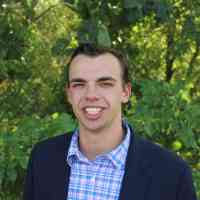


“The Turing Test event was a lot of fun!” Maria Draves said. But the lessons went far beyond a fun campus activity at Benedictine College in Atchison Kansas.
What she learned from the college’s Center of Technology and Human Dignity: Promoting Catholic Digital and Biomedical Ethics will shape her life as a teacher.
She participated in the event “Putting the Turing Test to the test” where students tried to see if they could distinguish between a human’s response to a question versus a chatbots. Afterwards, there was a discussion about how students can distinguish between chatbots and human answers.
In the past year, the Center has had a profound impact on Draves as it has allowed her to dive deeper into questions about human dignity and technology that have surfaced in her classes. These conversations have allowed her to apply new concepts to her various courses.
“A theme in a lot of my classes this year has been exploring anthropology and understanding who the human person is, especially in the 21st century,” Draves said. “There’s a heavy focus on how materialism and relativism shape modern understanding of the world and the human person. All these issues have come up in some way or another in the center as we discuss how to understand and look at technology through a Catholic lens.”
Since high school in Mazomanie, Wisconsin, Draves has been interested in learning about the Church’s teaching on human dignity.
When she arrived at Benedictine College and watched as the world embraced artificial intelligence at a rapid pace, she became more intrigued as to what the Church’s teaching on human dignity could inform about artificial intelligence.
Draves, a junior Secondary Education and English major, just did not know where to find that information.
But then she saw an announcement for a new center at Benedictine College — the Center for Technology and Human Dignity. This year, the Center’s first year, Draves, who serves as the co-president of the Center’s student club, exploring the Church’s rich teachings on human dignity and how it should inform one’s relationship with technology.
The center, she says, is more important today than ever and is grateful for the opportunities it has given her. “This center provides a space to learn more about these developments and connect them to our Faith,” Draves said. “To help students discern the proper uses of technology, avoid abusing it, and learn how to avoid falling into a dependence on technology to function.”
“I love learning about human dignity, and considering how essential it is to always keep it at the forefront of every issue. I was super excited to come together with a group of fellow students to consider the intersection of human dignity with rapid technology developments,” Draves said.
“We met twice to discuss Dr. Madden’s book Thinking about Thinking, and we had good discussions about why it matters that we engage in thinking rationally, and how that affects our humanity and everything we do,” Draves said.
These conversations, she says, are critical today as technology is becoming an ever-more pressing problem. “Looking around society today, there are so many issues that share the root cause of a lack of respect for human dignity. With the rapid developments today, it is essential to understand how respect for human dignity must inform technology,” Draves said.
Next year, the center hopes to expand its offerings by hosting an interdisciplinary panel of faculty from various departments to share how AI is impacting their respective fields.
“The plan would be that these faculty members could offer their opinions on technological developments and the intersection between technology and human dignity,” Draves said. “Students would be welcome to bring any questions they have about technology, bioethics, etc. and have their question answered from different perspectives, including Theology, Philosophy, and Nursing.”
Draves has also been “tapped” by the National Mortar Board honor society. Draves believes that the Center will become ever more important as students and faculty continue to ask questions about artificial intelligence and seek to understand what the Church teaches.
“This is an important center right now because there are such rapid developments in technology right now,” Draves said. “This center provides a space to learn more about these developments and connect them to our Faith, to help students discern the proper uses of technology, avoid abusing it, and learn how to avoid falling into a dependence on technology to function.”
By Jack Figge
Dear Reader,

Would you like to better understand the spiritual depth and daily insights of Jesus' parables?
We'd like to offer you our FREE video series, Christ the Storyteller. Each episode of this series will help you experience the profound truths Jesus conveys in each parable.
In 10 short lectures, Dr. Andrew Swafford, Professor of Theology, dwells on a different parable—revealing their theological meaning, spiritual insight, and practical guidance for everyday Catholic living.
Start your FREE video series today and explore the practical wisdom of Jesus’ Parables!
Receive My Free Video Series »