


Spanish, French, Polish … and Braille? Popular Holy Hour Guide Keeps Spreading


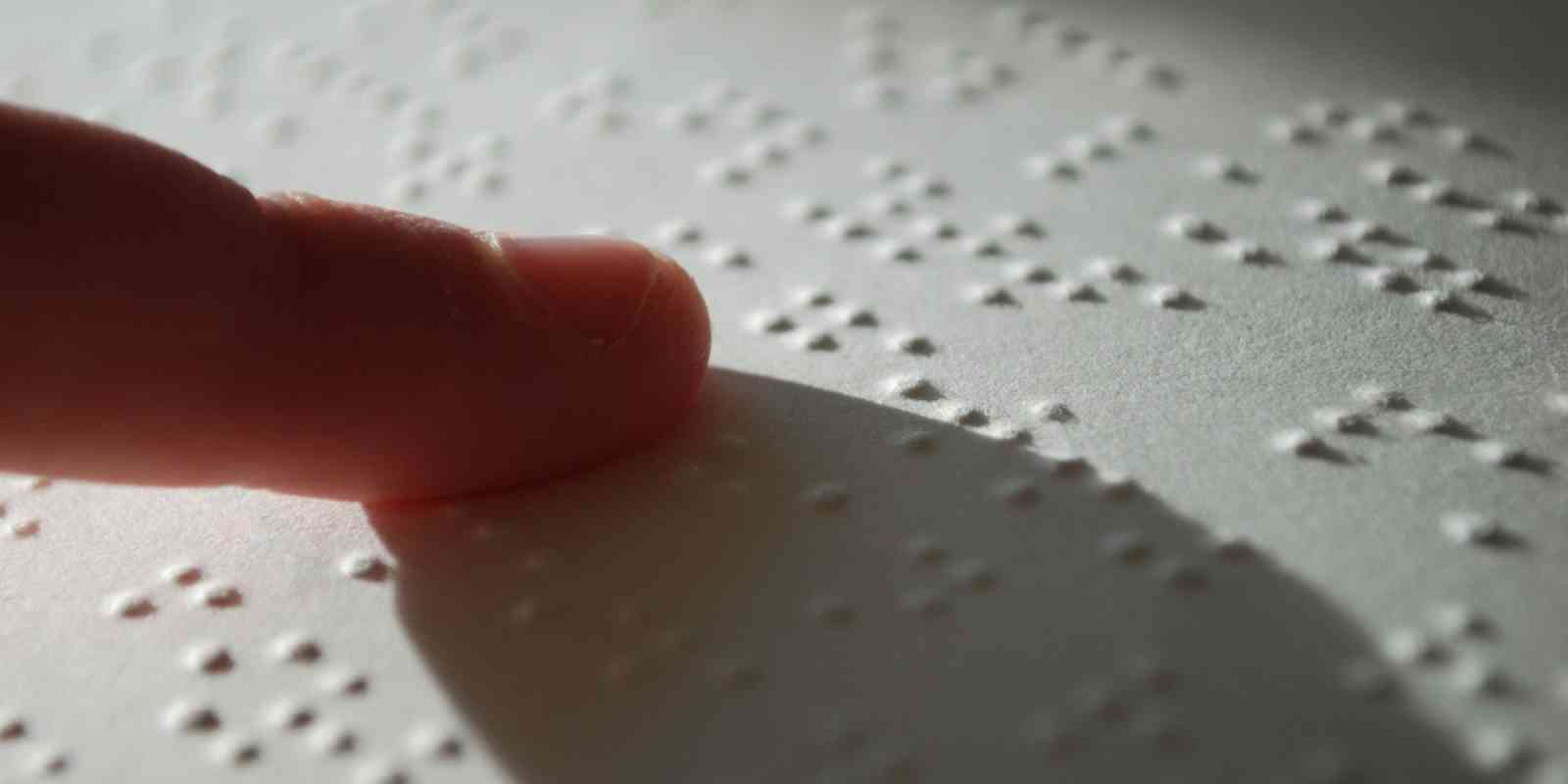
Now even the blind can use one of the most popular prayer resources offered by Benedictine College in Atchison, Kansas: The How to Pray a Holy Hour: A Minute by Minute Guide
It was used by the National Eucharistic Congress, it is accessed repeatedly daily by people worldwide online, published as a pamphlet by Holy Heroes, and translated into multiple languages, including Spanish, French, and Polish.
Now, thanks to the Xavier Society, the New York Catholic Braille Society, can add “Braille.”
Darby Reimer says the work of the nonprofit Xavier Society is a literal godsend. Growing up, she loved to sing at Mass at St. Dominic parish in Garden City, Kansas — but, being blind, she had to spend hours listening to the songs and memorizing the lyrics, since she could not read the Parish missals.
Then Reimer, who is now a freshman at Benedictine College, discovered the Xavier Society.
“Everything that I’ve used from the Xavier Society has been very helpful,” Reimer said. “I am super thankful that there’s an opportunity for blind Catholics to participate in the Mass as well as everyone else.”
New York Cardinal Timothy Dolan will celebrate the Xavier Society’s 125th Anniversary Mass Mass on Sunday Dec. 14 at St. Patrick’s Cathedral.
Recently, the Xavier Society republished Adoration Prayers for a Holy Hour – How to Pray a Holy Hour, a Minute by Minute Guide by Benedictine College writer in residence, Tom Hoopes.
“I think it will help people not only fully live their faith lives but fully live like their calling and what God is inviting them into,” the Xavier Society’s Aisling Redican said.
The braille version is free of charge for Xavier Society patrons, and it was released las month. Redican believes that this book will have a huge impact on individuals’ spiritual lives.
Eucharistic devotion has been the focus of the Xavier Society all along, she said. “We were founded in 1900 by a blind teacher of blind children. She was helping her students prepare for their First Communion and their confirmation, but they didn’t have access to the print materials that their sighted classmates were using,” Redican said. “She had this great determination to say that these kids should have these materials and be able to participate in their faith, to practice and make the sacraments and all those important milestones in a young Catholic life significant. And we’re still doing that.”
The Xavier Society translates and publishes new material after receiving specific requests from its patrons — individuals who use their resources. Sr. Dolores Dean, a blind sister with the Benedictine Monastery Church and Community in Bristow, Va., requested the translation after the other sisters began reading the book during Holy Hours.
“We have a lot of clients who will call and say, I’m doing a Bible study or a book club at my parish and I need this book in Braille. We also provide talking books, which are an audio accessible format,” Redican said. “If our patrons need something in an accessible format, we try and come through for them.”
Reimer often resorts to using apps on her phone that provide the audio for prayers. However, she prefers to use braille resources when they are available.
“If I want to pray in a community of people, like during the Liturgy of the Hours, I cannot read along with them without the Braille,” Reimer said. “Then, if I want to get away from my phone for a little bit, it would be nice to have all the prayers in braille.”
Reimer believes that this translation could have a huge impact on the spiritual lives of blind individuals.
“I think this could really help blind Catholics,” Reimer said. “I have never really had much experience with learning how to pray in adoration. It would also provide blind Catholics with a way to do the liturgy that doesn’t require an app, which is always a benefit.”
Image: Stefan Malmesjö – wiki
By Jack Figge


