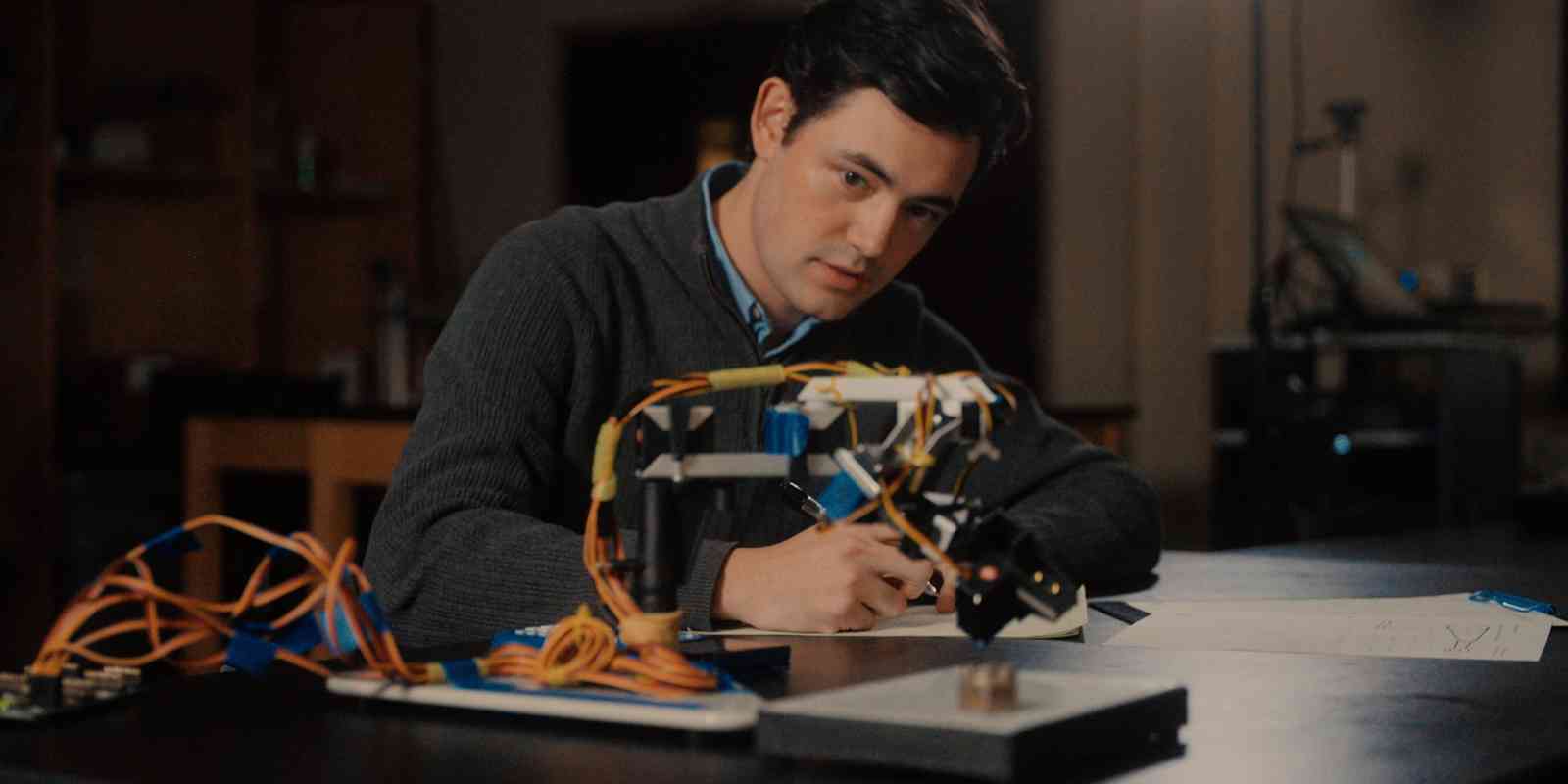
Mastering AI: Benedictine Launches New Center as Carlo Acutis Is Canonized


Pope Leo XVI asked for the Church to respond to the Artificial Intelligence revolution, so Benedictine College in Atchison, Kansas, has created the Center for Technology and Human Dignity, promoting Catholic digital and biomedical ethics.
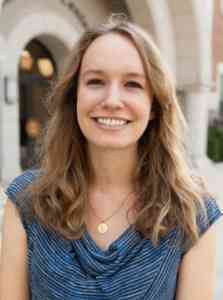
Dr. Mariele Courtois
The director for the center is Mariele Courtois, a Benedictine College theologian, bioethicist, and a member of the Vatican Dicastery for Culture and Education’s research group on artificial intelligence.
The center is set to launch on the day Pope Leo XIV canonizes St. Carlo Acutis, the youthful Italian saint known for his proficient use of computers and the Internet and, most of all, his joyful witness to the presence of Christ in the Eucharist and in others.
“Pope Leo XIV has asked Catholics to address the rise of artificial intelligence,” said President Stephen D. Minnis. “We are excited to dedicate this center under the patronage of St. Carlo Acutis, a model of how Catholics should use new technology thoughtfully but without fear. And its biomedical emphasis will help as we pursue a medical school.”
Courtois, the director of the center, will speak at three events in September and October, including the Order of Malta’s conference “A Catholic Theology of Work in the Age of AI” near Pittsburgh.
Courtois said, “This Center will provide resources from the Catholic intellectual tradition to grapple with the implications of rising technologies and to prepare our students and the wider community to seek this vocation, navigating both the drastic impacts and potential for good of emerging technologies.”
The first event of the center is an Oct. 3, 2025, event honoring St. Carlo Acutis at Pace e Bene, the nationally recognized Catholic bookstore in Atchison, Kansas.
“We are inviting students to the Eucharistic Miracles exhibit at Pace e Bene that displays the posters designed by Carlo Acutis and to join the Center as we start a novena to St. Carlo that ends on his feast day. We are asking this patron of our center for his intercession in assisting the work of Leo’s papacy and the Catholic engagement with technology ethics,” Courtois said.
Courtois is assembling a board of advisors to help make the center a leader in addressing artificial intelligence, including University of Notre Dame theologian Paul Scherz, whose work examines the intersection of theology, science, medicine, and technology, and Dr. Christopher Kaczor, who holds academic roles at Princeton University, the University of Notre Dame’s Center for Ethics and Culture, and Loyola Marymount University.
Affiliated Benedictine College Faculty Scholars include James Madden, Professor of Philosophy, who specializes in questions of human consciousness; Benedictine College bioethicists John Rziha and John Meinert, both Professors of Theology; and Michelle Zaleski, Assistant Professor of English.
These scholars were chosen for their ability to answer Pope Leo’s challenge. He said that “Artificial intelligence, biotechnologies, data economy and social media are profoundly transforming our perception and our experience of life. In this scenario, human dignity risks becoming diminished or forgotten, substituted by functions, automatism, simulations.”
Courtois said, “Benedictine College offers a unique experience for students that is unparalleled anywhere else: students have the opportunity to be formed in the Catholic tradition for a wide range of majors at a small, liberal arts college, including in Classics, theology, philosophy, political science, the STEM fields, and nursing.”
The Center grows out of the College’s Transform Culture in America plan, which says, Science, Technology, Engineering and Mathematics are “a particular emphasis of Benedictine College. To advance the mission through science … Benedictine College will form students comprehensively in bioethics, develop real-world skills, and foster external relationships to put our students in professional environments where they can be agents of change.”
Furthermore, the Transform Culture in American plan emphasizes the need to advance Benedictine College’s mission of community, faith and scholarship “in the technology sector.”
“The success of Benedictine College means that we are uniquely placed to answer Pope Leo’s call to be deeply engaged in new technologies, and the Center for Technology and Human Dignity will make that happen,” said President Minnis. “By understanding and fearlessly engaging with the field of artificial intelligence, our students can help Transform Culture in America.”
Courtois said with the Center’s help, “Students who will go out into the world to transform the culture can receive a well-rounded education that inspired them to deeply contemplate the tradition of Catholic thought and apply it in their vocations in the world.”